

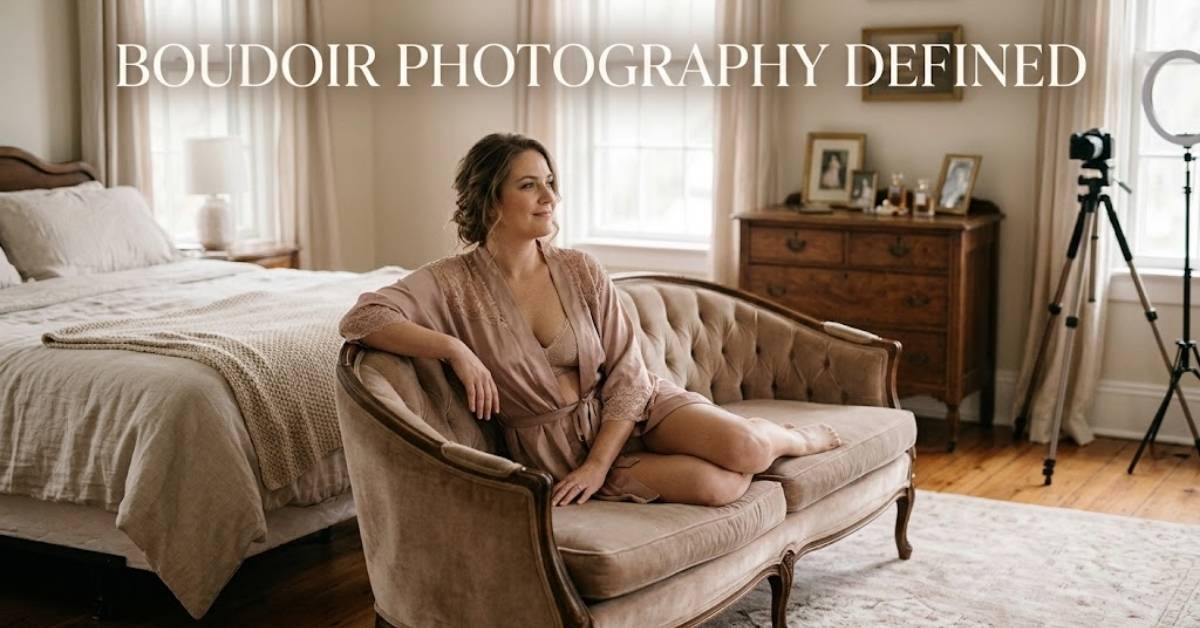
Ever heard the word boudoir and wondered if it’s just a fancy way to say bedroom? Or maybe you saw it on Instagram and weren’t sure what people actually meant.
Here’s the short answer. Boudoir meaning comes down to a private room, traditionally a women’s private sitting room, and today it stands for personal space, self-expression, and intimacy on your own terms.
The rest of this guide shows you where it started and why it still matters.
Definition & Core Meaning
The word sounds elegant, but the idea behind it is simple.
Let’s break it down before we get into history.
What Does Boudoir Mean?
A boudoir is a small, private room where a woman could rest, dress, and think.
It sat close to the bedroom space and often doubled as a dressing room.
Today the word stretches beyond rooms.
It describes a mood of privacy, comfort, and quiet elegance.
Core Meanings of Boudoir
Think of three layers.
There’s the physical room, the feeling of personal identity, and the style that grew around both.
You’ll hear all three used in everyday talk.
Context tells you which one someone means.
Simple Examples
Picture a friend saying, “I’m redoing my boudoir with soft lighting and a big mirror.”
She means a cozy corner built for relaxation.
Now picture a photographer saying, “I shoot boudoir portraits.”
That’s a style of artistic portraits focused on confidence and self-worth.
Historical & Cultural Background
Words carry baggage, and this one carries a lot.
Its story says plenty about how society saw women’s space.
Origins of the Word
Boudoir comes from the French verb bouder, which means to pout or sulk.
In the 18th century, the room was literally a place to withdraw when you were in a mood.
That detail is oddly human.
Even European aristocracy needed somewhere to be alone.
Western Cultural Interpretation
In French culture, the boudoir became a symbol of social status.
Wealthy women hosted close friends there, away from formal parlors.
Over time the room gained a romantic decor reputation.
Silk, perfume, and mirrors became its trademarks, and women’s autonomy quietly grew inside it.
Asian & Indigenous Parallels
Other cultures built similar spaces without using the French word.
Think of the Japanese inner chambers or the South Asian zenana, which were women-only environments.
Many Indigenous private spaces also served as ritual spaces for rest and reflection.
The idea of a protected, personal area is nearly universal.
Emotional & Psychological Meaning
A boudoir isn’t only about furniture.
It’s about how a space makes you feel inside.
Boudoir as Emotional Space
Ask yourself where you go to exhale after a long day.
That spot gives you emotional safety, and it works like a private sanctuary.
Inside it you can drop the performance.
Comfort and emotional boundaries both feel easier to hold there.
Identity & Personal Growth
Many women say boudoir moments helped them see themselves differently.
One reader told me a quiet evening of journaling in her robe did more than a pep talk.
That’s self-acceptance in action.
It builds confidence, self-awareness, and a healthier body image over time.
Symbolism
A boudoir often stands for femininity, individuality, and selfhood.
It says, “This part of my life belongs to me.”
That’s strong cultural symbolism packed into one small room.
It also reflects quiet strength, not just softness.
Different Contexts & Use Cases
The word shows up in more places than you’d guess.
Here’s where you’re most likely to run into it.
Personal Life
At home, a boudoir might be a corner with a vanity, textiles, and soft lighting.
It’s your home design choice for a calmer day.
Some people treat it as a self-care ritual.
They add candles, music, and ten quiet minutes.
Social Media
Scroll Pinterest trends and you’ll see boudoir everywhere.
Instagram aesthetics love its warm tones and visual storytelling.
Remember that feeds show a polished slice.
Real boudoir spaces are usually messier and far more personal.
Relationships
Couples use the idea to talk about intentional intimacy.
It’s less about performance and more about trust and emotional connection.
Vulnerability in relationships feels safer in a calm setting.
A thoughtful space can open honest conversations.
Professional & Modern Usage
In business, boudoir pops up in interior design, fashion design, and sophisticated lingerie lines.
Brands sell a feeling as much as a product.
Photographers also built a whole industry around boudoir photography.
It sits inside contemporary culture as both art and service.
Hidden, Sensitive, or Misunderstood Meanings
Not everyone hears the word the same way.
That gap causes plenty of confusion.
Common Misconceptions
Many people assume boudoir equals explicit content.
That’s one of the biggest misconceptions about boudoir.
It can include sensuality, but it doesn’t have to.
Personal intention decides what it means.
Cultural Misinterpretations
In some places, the word gets read as immodesty or as provocative meaning.
That’s a cultural misunderstanding, not a universal truth.
Values around privacy and dignity shape these reactions.
Respect them, and you’ll avoid awkward moments.
When the Meaning Changes
Context flips the meaning fast.
A boudoir chat with a stylist differs from one with a stranger online.
Watch for objectification too.
When someone else controls the image, the original spirit gets lost.
Comparison Section
Words that sound alike can still point to different ideas.
A quick comparison clears things up.
Boudoir Compared to Similar Concepts
A bedroom is a place to sleep, while a boudoir is a place to be yourself.
A dressing room focuses on clothes, but boudoir adds mood and meaning.
Glamour leans on show, and boudoir leans on feeling.
Lingerie is one tool inside it, not the whole story.
Popular Types / Variations of Boudoir
Boudoir isn’t one look.
It comes in many flavors, so you can pick what fits you.
1. Classic Boudoir
Think vintage-inspired style with Old Hollywood charm.
Silk robes, pearls, and black-and-white photography set the tone.
2. Modern Boudoir
This version leans on minimalist style and neutral tones.
Natural daylight and clean design keep it fresh.
3. Romantic Boudoir
Lace fabrics, warm tones, and a dreamy atmosphere lead here.
It’s built around affection and softness.
4. Empowerment Boudoir
The focus is body confidence and personal power.
Expect strong poses, direct eye contact, and minimal retouching.
5. Bridal Boudoir
A bride often creates these portraits during wedding preparation.
Bridal lingerie, a wedding veil, and a gift for a partner celebrate love.
6. Artistic Boudoir
Here fine art meets creative expression.
Conceptual photography and experimental styling push the boundaries.
7. Moody Boudoir
Shadows and contrast lighting create mystery.
Rich textures invite introspection.
8. Luxury Boudoir
Think high-end photography in elegant hotel rooms.
Premium fabrics, designer lingerie, and satin sheets complete it.
9. Minimal Boudoir
This style honors natural beauty and authentic emotion.
Simple styling keeps the focus on you.
10. Personal Ritual Boudoir
No camera needed.
Meditation, journaling, candles, and body awareness turn it into self-reflection.
Key Insight
Every type shares one thread.
You choose the meaning, and nobody else gets to write it for you.
How to Respond When Someone Asks About Boudoir
People will ask, sometimes at odd moments.
A little preparation helps you answer with ease.
Casual Responses
Keep it light.
Try, “It’s a French word for a woman’s private room, and now it’s about feeling good in your own space.”
Meaningful Responses
Go a bit deeper.
Say, “For me it’s about confidence without permission and owning my story.”
Fun Responses
Humor works too.
“It’s where I go to sulk in style,” honors the original French verb bouder nicely.
Private or Reflective Responses
You don’t owe anyone a full explanation.
Sometimes “It’s personal, and I like it that way” is perfect.
Regional & Cultural Differences
Meaning shifts with geography.
Here’s a quick tour.
Western Perspective
In Europe and North America, boudoir often links to glamour, fashion, and body positivity.
It carries both romance and empowerment.
Asian Perspective
Many Asian traditions value heritage and modest private spaces.
The focus often rests on spiritual interpretation and family honor.
Middle Eastern Perspective
Privacy and dignity matter deeply here.
Women’s gatherings often serve as feminine space for friendship and rest.
African & Latin Perspectives
In many African and Latin communities, cultural aesthetics blend with celebration.
Body positivity shows up through color, music, and community.
Why Boudoir Still Matters in a Busy World
We’re all tired, glued to screens, and rarely alone.
A boudoir mindset reminds you to protect your emotional wellness.
It also supports modern self-care without the hype.
Small rituals can rebuild inner confidence, one evening at a time.
Conclusion
Boudoir began as a private room for sulking and ended up as a symbol of self-discovery, identity, and personal choice. It still means whatever you need it to mean.
What does boudoir mean to you? Drop a comment, share this with a friend, and tell us your favorite way to carve out personal space.
FAQs
What does boudoir literally mean?
It comes from the French verb bouder, meaning to sulk. Originally it named a room for withdrawing and privacy.
Is boudoir only about photography?
No, it isn’t. It also covers interior styling, fashion, and daily rituals.
Is boudoir sexual?
Not by default. It can include sensuality, but personal intention sets the tone.
Can men have a boudoir?
Absolutely. Any private sanctuary for rest and self-expression counts.
Why is boudoir empowering?
It lets you define your own self-image. That fuels self-love, authenticity, and individual freedom.
Is boudoir still relevant today?
Yes, and arguably more than ever. It speaks to modern femininity, emotional authenticity, and personal empowerment.
