

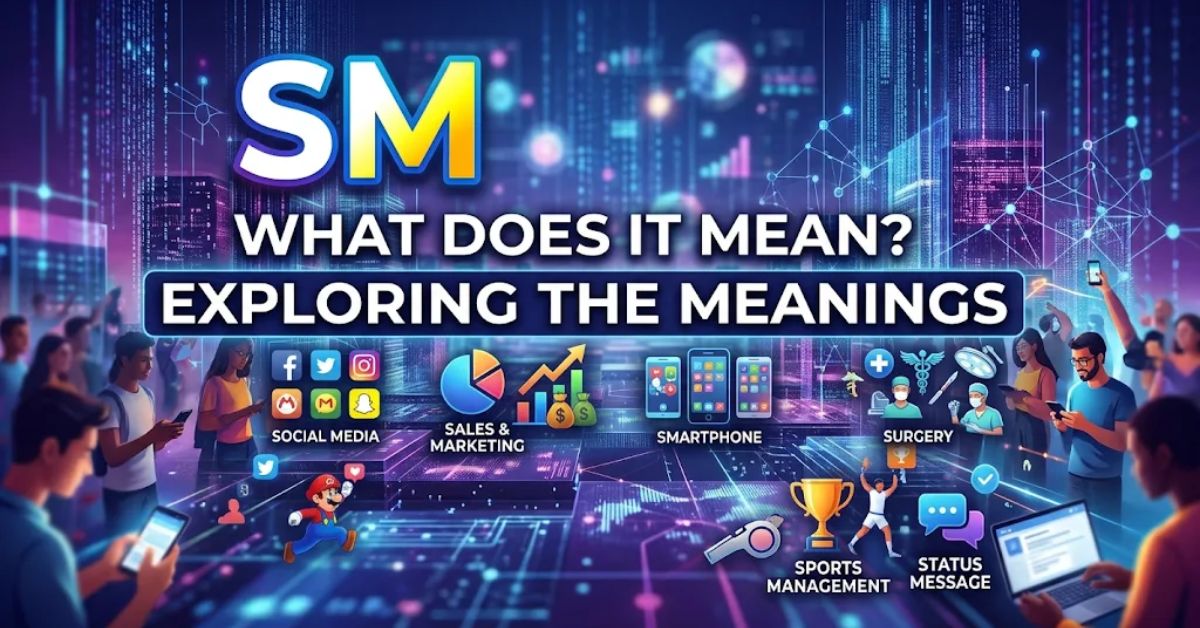
Have you ever received a text with SM and wondered what it meant? You’re not alone. This short abbreviation appears in everyday chats, social media posts, and online conversations. Most often, SM means So Much. People use it to add stronger feelings to their messages. For example, I miss you SM shows extra affection, while I love this SM expresses excitement. But that’s not its only meaning. In some conversations, SM can also stand for Social Media.
The meaning can change based on the topic and situation. You might see SM on Instagram, TikTok, WhatsApp, or Discord. It can also refer to SM Entertainment or a Stage Manager. So, how do you know which meaning someone intends? A little context usually makes it clear. This guide explains the different meanings of SM, shows real chat examples, and shares simple ways to reply without confusion.
Origin and Cultural Footprints of SM
The sm meaning in text developed alongside the rise of texting abbreviation culture. During the early 2000s, people used SMS messages to communicate quickly. Short messages helped them save time and express feelings with fewer characters.
SM became a convenient shorthand for So Much. People started adding it to emotional expressions like love you, miss you, and appreciate you.
As digital communication grew, another meaning became popular: Social Media. During the 2010s, marketers and content creators began using SM in professional conversations about online platforms.
The abbreviation now appears in several communities and communication styles.
- Early 2000s: Casual texters adopted shorter expressions.
- 2010s: Social Media became a common professional abbreviation.
- 2012 and 2013: Social media marketing gained wider attention.
- Today: Both meanings appear across messaging apps and online communities.
For example:
Alex: I miss you SM!
Jamie: Miss you so much too!
The meaning depends on the conversation and its topic.
Other Meanings of SM
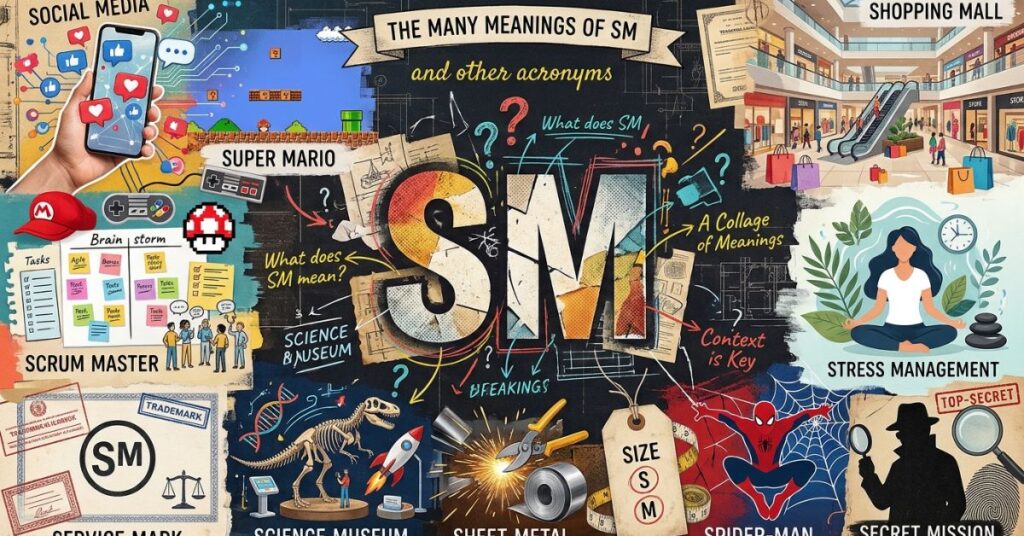
Although So Much is a common texting meaning, SM has several other definitions. Its meaning changes depending on the industry, platform, and conversation.
Here are some important interpretations:
- So Much: An emotional intensifier used to express strong feelings.
- Social Media: A professional shorthand for online platforms and marketing.
- Stage Manager: A theater professional who coordinates performances and backstage activities.
- Sadomasochism: A term used in adult and relationship discussions involving consensual pleasure associated with pain or dominance.
- SM Entertainment: A South Korean entertainment company associated with major K-pop artists.
- Send Message: An occasional shorthand in technical interfaces and customer service systems.
K-pop fans often use SM when discussing SM Entertainment. The company represents artists and groups such as EXO, NCT, and aespa.
For example:
Mia: SM just announced something about EXO!
Lily: Really? I need to check their latest updates.
Always consider the topic before choosing a definition.
Why Does SM Have So Many Different Definitions?
Have you ever seen two letters mean completely different things? SM is a perfect example of that situation.
SM is a two-letter abbreviation used across several industries and online communities. Since people prefer shorter expressions, different groups often create shorthand for their everyday conversations.
Text slang uses SM to express feelings quickly. Meanwhile, marketers use it when discussing Social Media strategies. Theater professionals may use it for the Stage Manager role.
This happens because digital communication encourages compressed language.
Here are a few reasons behind its different definitions:
- Short spelling: Two letters make SM quick to type.
- Different communities: Each group develops its own terminology.
- Online communication: Messaging apps encourage shorter expressions.
- Professional shorthand: Industries use abbreviations to save time.
- Context-based meaning: The surrounding conversation changes its interpretation.
For example:
Ryan: I love this SM!
Chris: Our SM campaign needs better content.
Ryan means So Much while Chris refers to Social Media.
Does SM Mean the Same Thing Outside the US?
The sm meaning can remain similar across English-speaking countries. However, local communication habits and professional settings can influence how people interpret it.
In the UK, Australia, and Canada, casual texters may use SM as shorthand for So Much. People also recognize Social Media in marketing and online discussions.
Meanwhile, SM Entertainment has a global audience because K-pop fans follow South Korean artists worldwide.
The abbreviation also appears in international theater productions. Stage Manager remains a familiar professional title in live events and backstage communication.
Consider these regional examples:
- US: Friends may write I miss you SM.
- UK: Casual messages may use SM to emphasize affection.
- Australia: People may use it in everyday digital conversations.
- Canada: Social Media discussions may use SM as professional shorthand.
- South Korea: K-pop communities often associate SM with SM Entertainment.
For example:
Emma: I miss our summer trips SM!
Olivia: Same! We need another vacation soon.
The spelling stays the same, but the conversation gives it meaning.
Who Uses SM Most?
SM appears among different age groups and professional communities. However, its usage depends heavily on the situation.
Casual texters often use SM to express love, excitement, appreciation, or frustration. Meanwhile, marketers and content creators use it when discussing social media marketing and content strategy.
Gen Z also uses texting abbreviations to keep conversations quick and expressive.
Different communities use SM in their own ways:
| Group | Common SM Meaning |
| Casual texters | So Much |
| Gen Z | So Much |
| Marketers | Social Media |
| Content creators | Social Media |
| Theater professionals | Stage Manager |
| K-pop fans | SM Entertainment |
| Professional teams | Social Media or Stage Manager |
For example:
Noah: I appreciate your help SM!
Ethan: Anytime! Happy to help.
Here, SM adds warmth and sincerity to a friendly message.
Real Conversation Examples Using SM
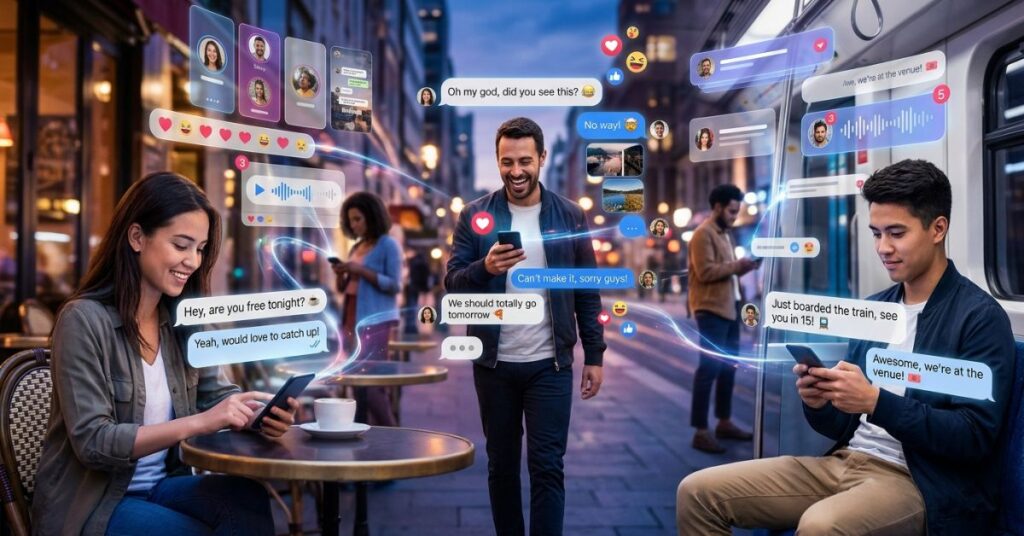
Real conversation examples make the sm meaning easier to understand. The abbreviation can express different emotions depending on the situation.
Here are some everyday examples:
Example 1: Expressing Love
Mia: I love you SM.
Noah: I love you so much too!
Here, SM means So Much. It makes the message feel warmer.
Example 2: Missing a Friend
Alex: I miss you SM. When are you visiting?
Sarah: Hopefully next weekend!
This example shows affection between close friends.
Example 3: Social Media Discussion
Daniel: We need to improve our SM strategy.
Ryan: Agreed. Instagram and TikTok need more attention.
Here, SM means Social Media.
Example 4: K-pop Conversation
Lily: Did you see the latest SM Entertainment news?
Emma: Yes! I’m excited about the NCT updates.
This conversation uses SM as a reference to the entertainment company.
Example 5: Theater Production
Producer: Has the SM spoken with the director?
Assistant: Yes. They’re preparing everything for Act Two.
Here, SM refers to the Stage Manager.
Usage of SM in Different Contexts
The sm meaning changes with the conversation’s purpose. You can understand it more easily by looking at the surrounding words and the people involved.
In casual texting, SM usually works as an emotional intensifier. It adds extra feeling without making your message longer.
For example:
Emma: I love this song SM!
Mia: Same! It’s been on repeat all day.
In professional conversations, SM often means Social Media. Marketers use this shorthand when discussing campaigns, engagement, and content creation.
For example:
Manager: Our SM performance needs improvement.
Employee: I’ll review our Instagram and Facebook results.
The abbreviation can also appear in theater and technical settings.
- Personal chats: Express love, affection, and appreciation.
- Relationship texting: Add warmth to romantic messages.
- Marketing discussions: Refer to Social Media strategies.
- Theater productions: Identify the Stage Manager.
- Technical interfaces: Occasionally refer to Send Message.
Always check the topic context before interpreting SM.
How Gen Z Uses SM Today
Gen Z uses short expressions to make digital communication faster and more expressive. SM fits naturally into this style of casual texting.
When young people write SM, they often mean So Much. They use it to emphasize feelings, reactions, and everyday opinions.
For example, someone might write I love this outfit SM under an Instagram post. Another person might use it in a WhatsApp group chat to show appreciation.
Gen Z also enjoys mixing emotional expressions with irony and humor. Sometimes, SM makes an ordinary reaction sound dramatically enthusiastic.
Here are some common examples:
- I miss summer SM!
- This outfit looks good SM.
- I love this playlist SM.
- Need a vacation SM.
- That movie made me laugh SM.
SM also appears alongside other texting abbreviations:
- ILY: I Love You
- IMY: I Miss You
- TBH: To Be Honest
- NGL: Not Gonna Lie
- SMH: Shaking My Head
- RN: Right Now
For example:
Ava: TBH, I love this new song SM.
Zoe: Same! I’ve been listening to it all day.
The appeal is simple: SM keeps messages short while adding personality.
Does SM Mean Send Message?
Yes, SM can sometimes mean Send Message in technical settings. However, this interpretation isn’t common in everyday texting or casual conversations.
You might see this shorthand in chatbots, customer service systems, or user interface instructions. These systems often use short labels to make buttons and actions easier to understand.
For example, a messaging app might use SM as an internal abbreviation for a send-message function. However, most users simply see a button labeled Send.
Here are situations where this interpretation might appear:
- Chatbots: Internal shorthand for sending a message.
- Customer service systems: Technical labels for messaging actions.
- User interfaces: Shortened instructions in certain digital tools.
- Software development: Abbreviations used in internal documentation.
Conversation example:
Alex: What does SM mean in this app?
Ryan: It might refer to the Send Message function.
Remember, the sm meaning depends on context. In personal conversations, So Much is a more likely interpretation.
SM Meaning Across Social Media
The sm meaning can change across social media platforms. People often use it differently depending on their audience and conversation.
On platforms like Instagram, TikTok, and WhatsApp, SM commonly appears as So Much. Meanwhile, LinkedIn users may use it as shorthand for Social Media.
Here’s how the abbreviation can appear across popular platforms:
| Platform | Possible SM Meaning | Common Usage |
| So Much | Captions and comments | |
| TikTok | So Much | Videos and reactions |
| Twitter/X | So Much / Social Media | Posts and discussions |
| Social Media | Marketing and professional content | |
| Discord | So Much | Gaming chats and group conversations |
| So Much | Personal messages | |
| So Much / Social Media | Comments and discussions | |
| Slack | Social Media | Workplace communication |
Conversation examples:
Instagram: I love this picture SM!
LinkedIn: Our SM strategy needs improvement.
Discord: I enjoyed that game SM!
The platform gives you a useful clue. However, always check the complete sentence before deciding what someone means.
Common Confusions
The sm meaning sometimes confuses people because the same abbreviation represents different expressions. You might understand one meaning while someone else uses another.
Most confusion happens when people ignore the surrounding conversation. A quick look at the topic usually clears things up.
Here are some common misunderstandings:
- SM vs. SMH: SM can mean So Much while SMH means Shaking My Head. They express completely different things.
- SM vs. Social Media: One intensifies an emotion while the other refers to online platforms.
- SM vs. SM Entertainment: K-pop fans use SM when discussing the South Korean entertainment company.
- SM vs. Stage Manager: Theater professionals use SM for a production role.
- SM vs. Send Message: This interpretation may appear in technical settings rather than casual texting.
Conversation example:
Mia: I miss you SM!
Alex: Are you talking about social media?
Mia means So Much, not Social Media.
To avoid common confusions, consider three things:
- Who sent the message?
- What topic are you discussing?
- Does the sentence express emotion or describe something professional?
These clues make context-based meaning much easier to understand.
Related Slang Terms
SM belongs to a wider group of texting abbreviations. People use these expressions to save time and make digital communication feel more natural.
Some terms express emotions while others share opinions or reactions. You may see several of them together in casual texting and group chats.
Here are related slang terms worth knowing:
| Slang | Full Form | Meaning |
| SMH | Shaking My Head | Disappointment or disbelief |
| TBH | To Be Honest | Sharing an honest opinion |
| NGL | Not Gonna Lie | Introducing a truthful statement |
| ILY | I Love You | Expressing love |
| IMY | I Miss You | Showing that someone is missed |
| SO | Significant Other | Romantic partner |
| LY | Love You | Showing affection |
| RN | Right Now | Referring to the present |
| ISTG | I Swear To God | Emphasizing a statement |
| OML | Oh My Lord | Expressing surprise |
| LMY | Love Me, Yeah | A less standardized abbreviation |
| TMP | Depends on context | Can have different interpretations |
| NTM | Not Too Much | A possible casual texting interpretation |
Conversation example:
Emma: TBH, I miss you SM.
Noah: ILY too! Let’s meet soon.
These abbreviations make messages shorter and more expressive. However, not everyone knows every slang term, so clear wording still matters.
How to Reply When Someone Says SM
Knowing the sm meaning makes replying much easier. Your response should match the person’s tone and the situation.
If someone uses SM to express affection, respond warmly. If they use it professionally, focus on the actual topic instead.
Here are some natural ways to reply:
1. Friendly Replies
Use these when a close friend expresses appreciation or excitement.
- Same here!
- That’s so sweet!
- I appreciate you too!
- You’re the best!
2. Romantic Replies
If your partner uses SM in an affectionate message, return the warmth.
- I love you even more!
- Miss you too, sweetheart!
- You’re always on my mind.
- Can’t wait to see you!
3. Casual Replies
These work well in everyday conversations.
- Haha, same!
- Absolutely!
- I feel you!
- That’s awesome!
4. Professional Replies
If SM means Social Media, keep your response focused.
- Let’s discuss the content strategy.
- We should review our engagement.
- I’ll check the latest campaign results.
Conversation example:
Sarah: I miss you SM!
Jake: Miss you too! Let’s catch up this weekend.
The best reply feels natural. You don’t need complicated words to keep a conversation going.
When Did SM Go Mainstream?
The sm meaning developed alongside the growth of digital communication. Like many texting abbreviations, it became useful when people wanted shorter ways to express everyday thoughts.
During the SMS era of the early 2000s, mobile users often shortened words to fit quick text messages. So Much became a convenient expression for adding emotional emphasis.
The Social Media interpretation grew alongside online platforms during the 2010s. As Facebook, Twitter, and Instagram gained attention, marketers and content creators needed shorter professional terms.
The years 2012 and 2013 also saw growing interest in social media marketing. However, there isn’t one confirmed date when SM became mainstream.
A simple timeline:
- Early 2000s: SMS texting encouraged shorter expressions.
- 2010s: Social Media became common professional shorthand.
- 2012–2013: Social media marketing gained wider visibility.
- Today: SM appears in casual chats, professional discussions, and online communities.
Conversation example:
Ryan: I love these old photos SM!
Alex: Same! Social media makes sharing memories easy.
SM continues to serve different purposes. Its meaning still depends on the people, platform, and topic involved.
Conclusion
Understanding sm meaning makes online chats easier. SM usually stands for So Much in text messages. People use it to show strong feelings, love, excitement, or appreciation. For example, I miss you SM means I miss you so much. However, sm meaning can change with the conversation. It may also stand for Social Media in marketing or online discussions. You should always check the words around it before deciding what someone means.
Now that you know the sm meaning, you can understand messages with more confidence. You may see this short form on WhatsApp, Instagram, TikTok, and Discord. It can also have other meanings in different fields. Remember, context is the key to understanding sm meaning correctly. When someone uses SM, read the full message before replying. This simple habit helps you avoid confusion and keep your conversations natural and clear.
FAQs
What does SM mean in a text?
SM usually means So Much in text messages. The sm meaning depends on the conversation and surrounding words.
What does SM mean in a relationship?
In relationships, SM often means So Much. It adds affection, like saying I miss you so much.
What does SM mean?
The sm meaning is usually So Much or Social Media. The correct meaning depends on the context.
What is SM in Gen Z?
Gen Z often uses SM to mean So Much. It adds emotion and emphasis to casual online messages.
What does SM mean in slang?
In slang, SM commonly means So Much. The sm meaning can change across chats, platforms, and conversations.
