

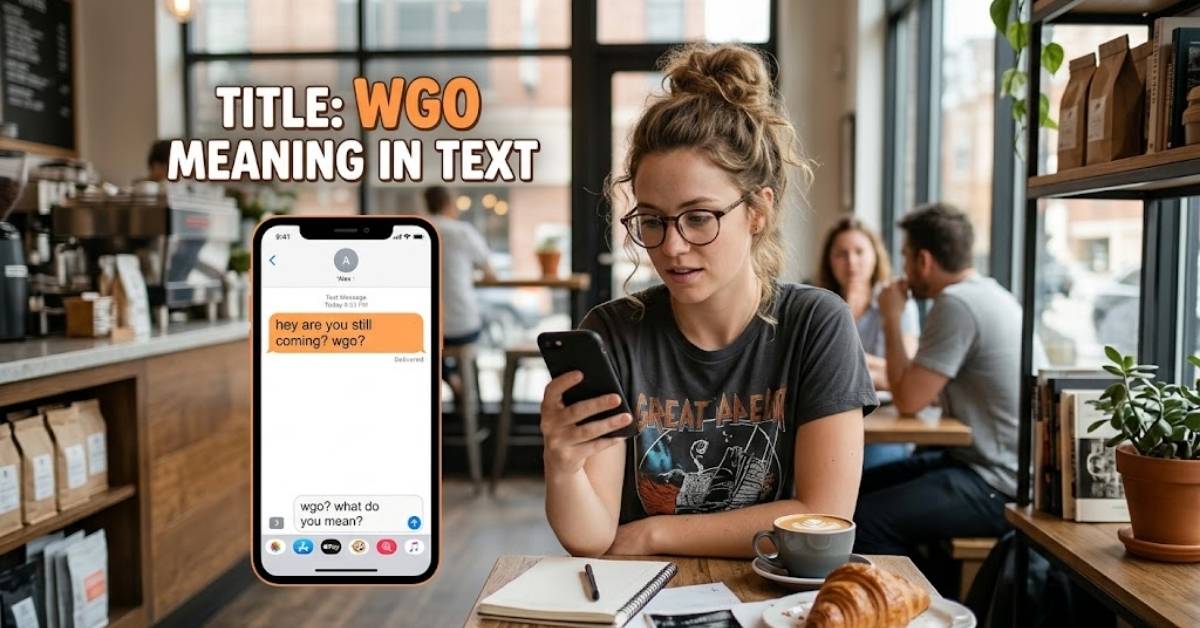
A friend texts you “WGO” and nothing else. You stare at it, wondering if it’s a typo or a secret code.Here’s the short answer. WGO almost always means “What’s going on?” in text slang. It’s a quick casual check-in that asks about your current situation.
If you’ve ever felt lost reading chat abbreviations, you’re not alone. This guide covers what WGO means, how to reply, and when it means something else.
What Does WGO Mean in Text? 📱
In WGO meaning in text, the letters stand for “what’s going on.” The sender wants to know what you’re up to, or what’s happening around you.
Think of it as a lazy “hey, what’s up?” typed with three letters. You’ll mostly see it in SMS texting, messaging apps, and social media messages.
Quick answer
WGO = What’s going on / what’s happening. Reply with a short situation update, like “Not much, you?”
Nobody expects an essay. A few words do the job.
Why Do People Use WGO in Texting? 💬
People use texting abbreviations because typing on a phone is slow and thumbs get tired. WGO survives because it’s useful, not because it’s fancy.
Here are the five reasons it sticks around.
It is quick
Three letters beat three words every time. That’s fast communication at its simplest.
When you’re sending quick messages between classes or meetings, those saved seconds add up.
It feels casual
WGO signals you’re relaxed. Nobody sends it to a boss or a bank.
That informal language tells the other person to loosen up too.
It can start a conversation
Sometimes you don’t have a topic. You just want to talk. WGO works as a conversation starter with zero pressure.
The other person can answer big or small. Either way, the chat is rolling.
It fits mobile communication
Mobile communication rewards short short forms. Small screens and autocorrect make long sentences annoying.
Most smartphone communication habits grew from this exact problem.
It can ask about a situation
Say you hear sirens outside, or your group chat suddenly blows up. WGO asks about the current event without extra words.
It’s the text version of leaning over and saying “what’s happening?”
WGO Meaning Can Depend on Context 🔎
No abbreviation carries one fixed meaning. Conversation context decides everything, from the surrounding words to the tone of conversation.
WGO has other uses too. Outside of chat, some people read it as the World Gastroenterology Organisation, and Winnebago Industries trades under the ticker WGO. Those show up in medicine and finance, not in your DMs.
A useful rule
Casual chat means “what’s going on.” Formal or technical setting means check for an organization name or company abbreviation.
When unsure, context clues win. Look at who sent it and where.
Examples of WGO in Text Messages 💬
Seeing text message examples makes this click faster than any definition. Here are eight everyday texting situations.
Notice how the meaning stays the same while the mood changes.
Example 1: Checking on a friend
Your friend went quiet after a rough week. You text, “Hey WGO?”
It’s a gentle friend check-in. You’re showing you care without making it heavy.
Example 2: Asking about plans
“WGO tonight?” Here you’re asking what the group is doing. It’s an activity question wrapped in slang.
Expect answers like “Pizza at Sam’s” or “Nothing yet.”
Example 3: Asking about a strange situation
You see five missed calls from your cousin. You text, “WGO??”
The double question marks show curiosity with a dash of worry. You want details fast.
Example 4: Casual conversation
“Yo WGO” is pure small talk. Nothing’s wrong, nothing’s planned.
It’s a casual conversation opener, like waving across a room.
Example 5: Checking on a group
In a group chat, someone drops “WGO here” after a long silence. They want to know why everyone vanished.
A few replies later, the chat wakes up again.
Example 6: Showing confusion
You walk into a meeting and the room is tense. You text a coworker friend, “WGO with the meeting?”
That’s confusion in three letters. You want the backstory.
Example 7: Asking what is happening right now
“WGO rn” adds RN (right now) for speed. It pushes for an immediate situation update.
Use it when something time sensitive seems off.
Example 8: A playful check-in
“WGOOO 😂” uses repeated letters and an emoji to sound goofy. It’s playful texting at its best.
Stretched spelling usually means high energy, not a problem.
What Tone Does WGO Have? 😊
WGO has no built-in mood. The conversation tone comes from punctuation, emojis, and timing.
Same three letters, very different feelings. That’s why you read the whole message, not just the abbreviation.
WGO can sound friendly
A lowercase “wgo” with a smiley feels warm. It says “I’m thinking of you.”
Friendly messages like this usually come from people you already trust.
WGO can also sound urgent
“WGO???” in capitals after a mysterious notification feels tense. The question marks and caps signal urgency.
In that case, reply fast. They probably need an answer now.
Is WGO the Same as “What’s Going On?” 🤔
Mostly yes. Most dictionaries of slang list WGO as short for what is going on, which is the standard English phrase.
The difference is style. One is conversational English, the other is a shortcut.
The key distinction
“What’s going on?” works anywhere. WGO only works in casual English, mainly texts and chats.
Never write WGO in a formal email or a business report. It will look odd.
🤒WGO vs. Similar Texting Abbreviations
WGO has plenty of cousins. Here’s a quick comparison of popular abbreviations you’ll see near it.
| Abbreviation | Meaning | Typical use |
| WGO | What’s going on | General check-in |
| WYD | What you doing | Asking about activity |
| WYA | Where you at | Asking about location |
| HBU | How about you | Returning a question |
| LMK | Let me know | Asking for an update |
| IDK | I don’t know | Honest uncertainty |
| BTW | By the way | Adding a side note |
| BRB | Be right back | Short pause |
Learning these common texting terms builds your texting vocabulary fast. A few less common abbreviations may confuse you, but context helps.
WGO vs. WYD: What Is the Difference? 📲
These two get mixed up constantly. They look similar and often show up in the same chats.
Still, they ask different questions.
WGO
WGO is broad. It covers the situation question, not just you.
It asks “what’s happening here?” or “what’s happening with everything?”
WYD
WYD is narrow. It asks “what are you doing right now?” and nothing else.
You’d answer with your own activity, like “just doing homework.”
Simple distinction
WGO = the situation. WYD = you.
If you’re asking what someone is doing, use WYD. If you want the bigger picture, use WGO.
How to Respond to “WGO” 💬
Replying is easy once you spot the intent. Match the energy of the message and keep it short.
Here are five go-to replies.
If nothing is happening
Say “Not much, you?” or “Nothing really.” Simple and friendly.
Adding HBU keeps the chat moving without effort.
If you are busy
Try “Busy rn, text you later.” That’s honest and polite.
No one takes offense at a short, clear answer.
If something interesting is happening
Share the story. “We’re heading out, wanna come?” turns a small text into a plan.
This is where digital conversations get fun.
If you are unsure what they mean
Ask. “Do you mean what’s going on with the plans?” is a fine clarification request.
Guessing wrong is worse than asking once.
If they are asking about a specific event
Answer that event only. If they text “WGO with the meeting?”, reply with the meeting update.
Skip the extra details unless they ask.
Is WGO Used by Everyone? 🌐
Not even close. Texting culture varies a lot, and WGO is more of a niche shortcut than a household term.
Some people use it daily. Others have never seen it.
Age and communication habits
Age differences in texting matter. Younger users lean on slang and abbreviations more, while older users often type full sentences.
Neither style is wrong. They’re just communication habits.
Social groups
Close friends build private shorthand. A friend group might use WGO constantly while a coworker never does.
That’s normal community-specific slang at work.
Online communities
You’ll see it in gaming chats, Discord servers, and fan groups. Online communities spread slang quickly because they chat all day.
A phrase that feels new to you may be old news there.
Personal preference
Some people love short forms. Others type “what’s going on” every time.
Your personal texting style is your call.
The Origin and Evolution of WGO 🕰️
Nobody has a documented birth date for WGO, so don’t trust anyone who gives you one. What we do know is how this kind of slang grows.
Chat rooms and instant messaging in the early days of the early internet communities pushed users toward short forms. SMS texting with character limits sped it up.
Today, social platforms evolution keeps reshaping digital language evolution. Some terms fade, some stick, and WGO sits in the middle as a less common abbreviation that still makes sense.
How WGO Works in Different Conversations
WGO is flexible. The same three letters can play several roles depending on what comes before and after.
Here are five common patterns.
WGO as a greeting
“WGO” or “Hey WGO” works like hello. It opens the chat without much pressure.
These greeting messages are friendly and low effort.
WGO as a question
When it comes with a question mark, it asks for a straight answer. “WGO here?” wants to know what’s happening at a location.
That’s a clear request for information.
WGO as a request for an update
During a busy day, “WGO” can mean “catch me up.” You’re asking for updates.
Reply with a quick situation update and you’re set.
WGO as a reaction
Sometimes it’s pure surprise. After a weird announcement, someone replies “WGO.”
It’s a reaction message, not a real question.
WGO with other abbreviations
You might see “WGO rn,” “WGO lol,” or “WGO btw.” Pairing acronyms like RN, LOL, and OMG adds flavor.
That mixing is normal in online shorthand.
WGO in Social Media and Online Chats 📱
On social platforms, WGO pops up in DMs, replies, and live chats. People use it as a quick nudge.
You may also spot it in social media comments under a surprising post.
Context matters more than ever here. A reply to a meme means something different from a reply on a friend’s story, so check the whole thread.
WGO in Group Chats 👥
Group chats move fast. WGO helps you catch up without scrolling through hundreds of messages.
Someone replies with a short recap, and you’re back in the loop.
It also works as a casual check-in to wake a quiet chat. Just don’t spam it, or people will mute you.
Common Mistakes When Interpreting WGO ❌
Even small abbreviations can trip you up. Here are five slip-ups to avoid.
Most come from reading too fast.
Assuming every abbreviation has one universal definition
Slang shifts by group. Multiple meanings are normal, and you’ll see them in gaming terms, workplaces, and personal shorthand.
Stay flexible, especially with technical terms.
Ignoring the surrounding conversation
The sentence before WGO usually tells you everything. Skip it and you’ll misread the whole message.
Always scan up first.
Treating casual shorthand as formal English
WGO belongs in friendly chats only. In academic writing, professional documents, or official applications, it would look sloppy.
Save the shortcuts for friends.
Overanalyzing a simple message
Sometimes WGO is just WGO. A friend asked what’s going on, nothing more.
Don’t hunt for hidden drama.
Assuming the sender is upset
Short messages can feel cold, but that’s often just typing speed and habit.
Check the punctuation meaning and emojis before you worry.
How to Use WGO Naturally ✍️
Use WGO the way you’d talk to a friend. Keep it light, short, and relaxed.
Think about who’s reading before you hit send.
Good situations
Texts with friends, close family, and gaming communities are great fits. Group chats and casual DMs work too.
Pair it with an emoji to soften the tone.
Situations to avoid
Skip it with a boss, a client, or a teacher. Also avoid it in formal emails or anything official.
When the setting feels serious, type the full phrase.
WGO Example Sentences for Everyday Texting
Here are quick lines you can copy or tweak.
- “Hey, WGO tonight?”
- “WGO here? The room got quiet.”
- “Yo WGO, I just got home.”
- “WGO with the plans? I need a heads up.”
- “WGO rn? You sounded stressed.”
Mix them up so you don’t sound like a robot. Real everyday texting has a bit of variety.
Can WGO Have Other Meanings? 🤔
Yes. Outside of chat, WGO can point to an organization name like the World Gastroenterology Organisation, or a stock ticker for a vehicle maker.
Niche lists also show other guesses, but they rarely matter in daily life.
If WGO shows up on a business site or in a medical document, don’t assume slang. Specialized contexts need a closer look.
WGO and Digital Communication Etiquette 💡
Good digital etiquette is about knowing your audience awareness. The same message can feel friendly or sloppy depending on who gets it.
A little care keeps things smooth and clear.
With close friends
Go ahead and use it. Friends love informal expressions, and they’ll answer fast.
Relax and have fun with it.
With someone you barely know
Be a bit careful. They may not know the slang, and communication clarity matters.
Write “what’s going on?” if you’re unsure.
In a formal setting
Skip WGO. Choose complete sentences and a polite tone.
It shows respect and avoids mix-ups.
Final Thoughts
WGO means “what’s going on” in nearly every texting situation. It’s quick, casual, and easy to answer.Read the context, match the tone, and keep your reply short. That’s all it takes.
Got a funny WGO story, or a different meaning you’ve seen? Drop it in the comments and share this guide with a friend who’s still confused.
FAQs
What does WGO mean in text?
WGO means “what’s going on?” It’s a casual way to ask about someone’s day, plans, or current situation.
Is WGO a common texting abbreviation?
It’s known but not as popular as LOL or BTW. Many people recognize it, while others have never seen it.
What does WGO mean in a chat?
In a chat, it works as a greeting or a check-in. It can also ask for a quick situation update in a group chat.
Is WGO the same as WYD?
No. WGO asks about the situation, while WYD asks what you are doing.
How should I respond to WGO?
Keep it short. Try “Not much, you?” or share what’s happening if something’s up.
